whatsapp
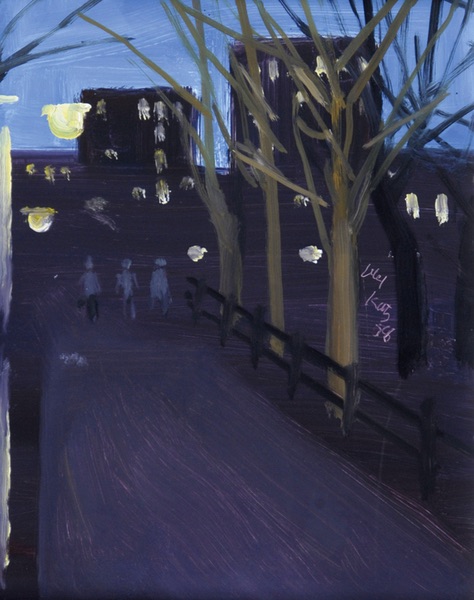
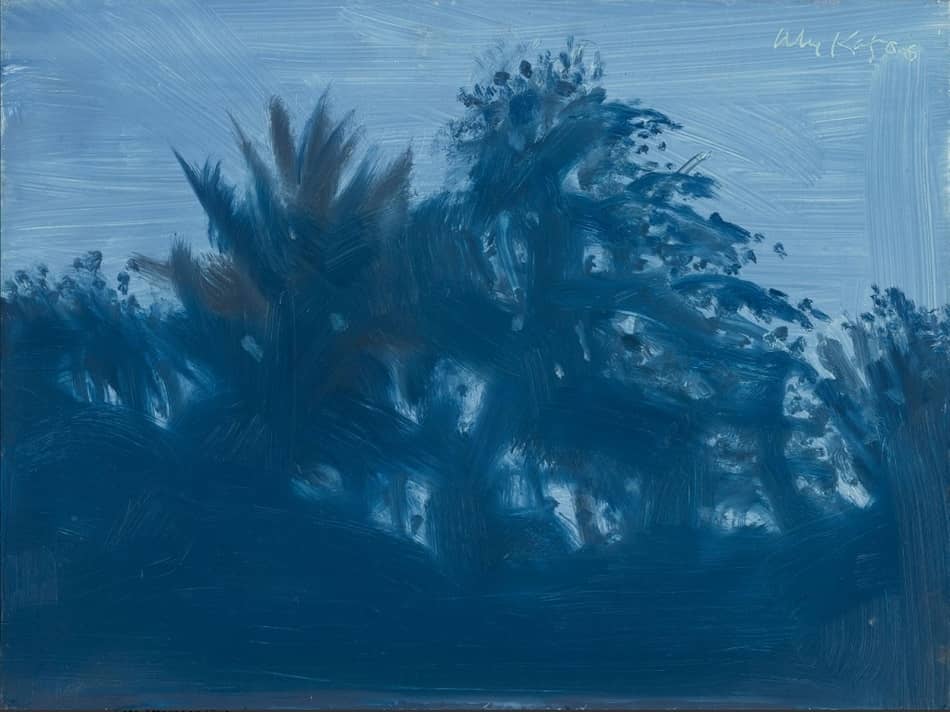
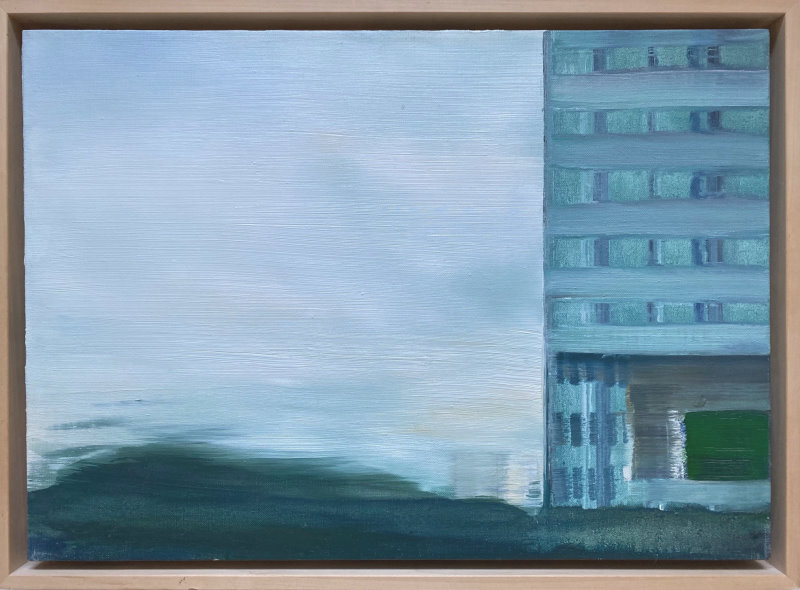
Alex Katz Washington Square Park / Small Painting / signed, dated / unique
| Year: | 2008 |
| Format: | 23,5 x 30,5 cm / 9.1 x 11.8 inch |
| Material: | Wood |
| Method: | Painting |
| Edition: | Unique |
| Other: | signed, dated |
Alex Katz – Washington Square Park (Small Painting).
| Year: | 2008 |
| Format: | 23,5 x 30,5 cm / 9.1 x 11.8 inch |
| Material: | Wood |
| Method: | Painting |
| Edition: | Unique |
| Other: | signed, dated |


Alex Katz - Washington Square Park Small Painting.
Alex Katz’s oil painting “Washington Square Park” is an outstanding example of his unmistakable style, which artfully blurs the lines between realism and abstraction. In this work, Katz captures the essence of one of New York’s most vibrant places, reducing it to its purest forms and colors.
The composition captivates with its cool elegance and the flat application of paint, typical of Katz’s affinity for Pop Art and Color Field painting. Instead of getting lost in minute details, the artist opts for monumental clarity. The lighting has an almost cinematic quality—as if a fleeting moment has been frozen for eternity.
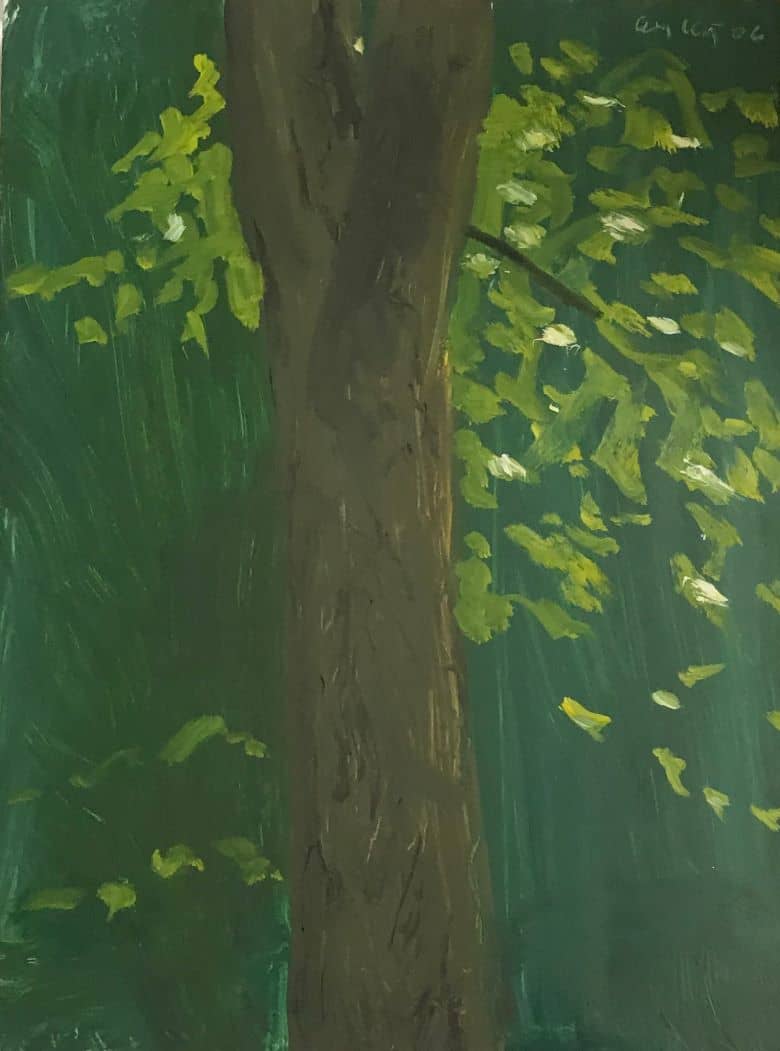
The park is not depicted here as a mere backdrop, but as an atmospheric space of light and shadow. The simplified lines of the architecture and the lush green of the trees create a tranquility that stands in stark contrast to the actual hustle and bustle of everyday New York life. It is this “immediate presence” that Katz masters so brilliantly: The painting feels modern, detached, and yet strangely familiar.
“Washington Square Park” is more than a portrait of a place; it is a study of perception itself. It invites the viewer to find beauty in simplicity and to rediscover urban space through the lens of radical aesthetic clarity.
Washington Square Park is far more than just a green space in the heart of Greenwich Village; it is a living monument to New York City history and a symbol of cultural freedom. Its striking appearance is dominated today by the monumental Washington Square Arch, a marble gateway erected in the late 19th century in honor of George Washington. The park serves as an unofficial campus for the adjacent New York University and attracts a vibrant mix of students, chess players, street performers, and tourists.
However, the site’s history is far more complex and somber than its current idyllic setting suggests. Before the area officially became a park in 1827, it served as an execution site and pauper’s cemetery, with an estimated 20,000 remains still lying beneath the grass. A silent witness to this era is the “Hangman’s Elm” in the northwest corner, the oldest tree in Manhattan, around which numerous legends of public executions have grown.
In the 20th century, the park became the epicenter of the American counterculture. It was the stage for the Beat Generation and the folk music movement of the 1960s, where legends like Bob Dylan gave their first open-air performances. The park’s existence in its current form is also thanks to the courageous resistance of civil rights activists like Jane Jacobs, who successfully prevented a four-lane road from being built through the middle of it in the 1950s. Today, Washington Square Park remains a place of creative exchange and urban energy, embodying the spirit of New York’s bohemian scene like few other places.
A similar small painting by Alex Katz was recently sold at auction for a record price. On May 15, 2026, the small painting “One Blue Flag” by Alex Katz was sold for $115,200 at the “Contemporary Art Day” auction at Sotheby’s in New York.
Alex Katz / Pioneer of Pop Art
Alex Katz is particularly famous for his figurative paintings: The son of Russian-Jewish immigrants, he was born in New York in 1927. As a pioneer of Pop Art, he always concentrated on the essentials and explored simplified forms and high-contrast color composition early on. His art is diverse, but always has beauty as its central theme. The artist can now look back on more than 200 solo and around 500 group exhibitions; his diverse works are part of over 100 collections worldwide. Alex Katz lives and works in New York and Maine.
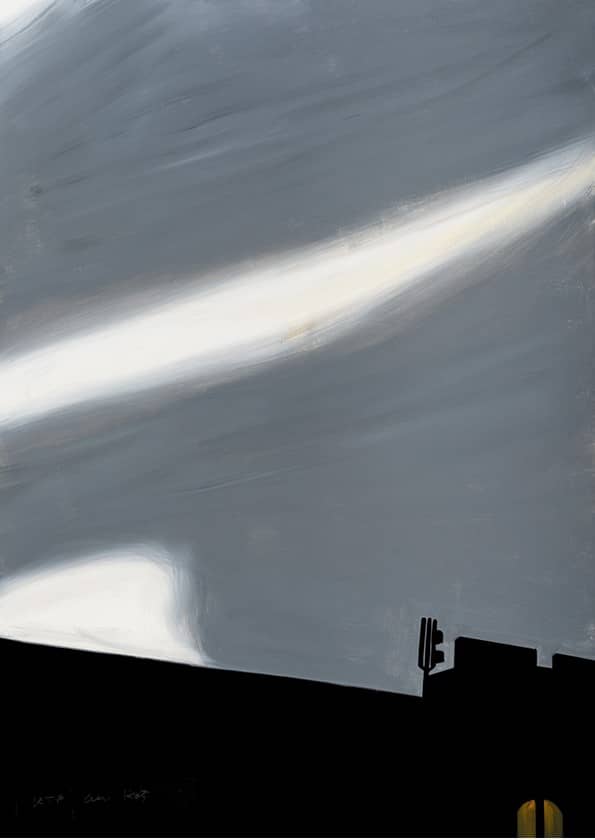




Year: 2008
Format: 23,5 x 30,5 cm / 9.1 x 11.8 inch
Material:Wood
Method:Painting
Edition:Unique
Other:signed, dated