whatsapp
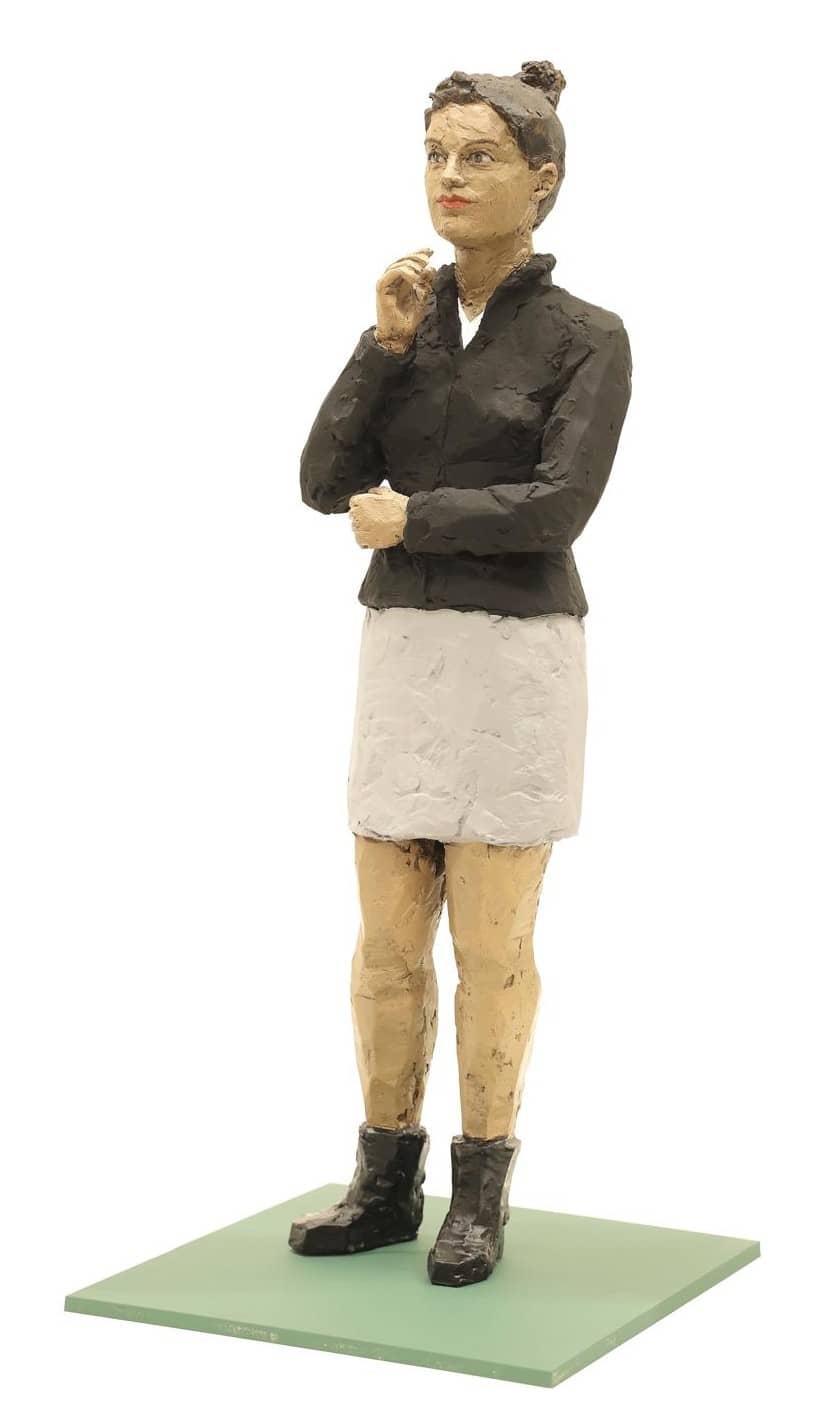
Stephan Balkenhol Venus / sculpture / signed, numbered / edition of 30
| Year: | 2026 |
| Format: | 27 x 64 x 27 cm / 10.6 x 25.2 x 10.6 inch |
| Material: | Bronze |
| Method: | sculpture |
| Edition: | 30 |
| Other: | signed, numbered on the base |
Stephan Balkenhol – Venus.
| Year: | 2026 |
| Format: | 27 x 64 x 27 cm / 10.6 x 25.2 x 10.6 inch |
| Material: | Bronze |
| Method: | sculpture |
| Edition: | 30 |
| Other: | signed, numbered on the base |


Stephan Balkenhol - Venus.
Stephan Balkenhol’s Venus is a hand-painted bronze sculpture from 2026. This sculpture depicts a standing female figure radiating a contemplative presence. The bronze statue stands on a simple green base. Balkenhol’s characteristic technique of roughly hewn texture is unmistakable; the visible chisel marks lend the figure vibrancy and dynamism. The nuanced color palette, combining earthy tones with subtle nuances, enhances the sculpture’s realism.
The figure’s clothing—a dark top, a light skirt, and sturdy boots—contrasts with her graceful posture; her hand rests elegantly on her chin, a sign of thoughtful self-reflection. Balkenhol’s deliberate abstraction captures a unique connection between individuality and universality, inviting the viewer to contemplate the figure’s inner world. This work is a great example of Balkenhol’s ability to reconcile simplicity and emotional depth, and solidifies his place as a master of contemporary sculpture.
The bronze sculpture titled “Venus” represents a deliberate provocation of our traditional visual habits. While the name immediately evokes associations with ancient Greek mythology and the Roman goddess of love and beauty, the work radically breaks with these expectations. Instead of the classical figure, often nude or only sparsely draped, the sculpture presents a woman in everyday, modern clothing. This decision by the artist is not merely an anachronism, but a profound repositioning of the ideal of femininity in art history. The title “Venus” functions as a conceptual framework connecting various historical layers. On the one hand, there is the reference to prehistoric Venus figurines, such as the famous Venus of Willendorf. These Stone Age idols primarily depicted woman as a symbol of fertility and vitality. By showing a clothed woman, the modern bronze sculpture transforms this archaic primal force into the context of the present. Fertility is no longer interpreted purely biologically through naked, voluptuous body forms, but rather as the creative and vibrant presence of women in the here and now. Clothing protects the privacy and individuality of those depicted, transforming them from mere objects of contemplation into subjects with their own stories.
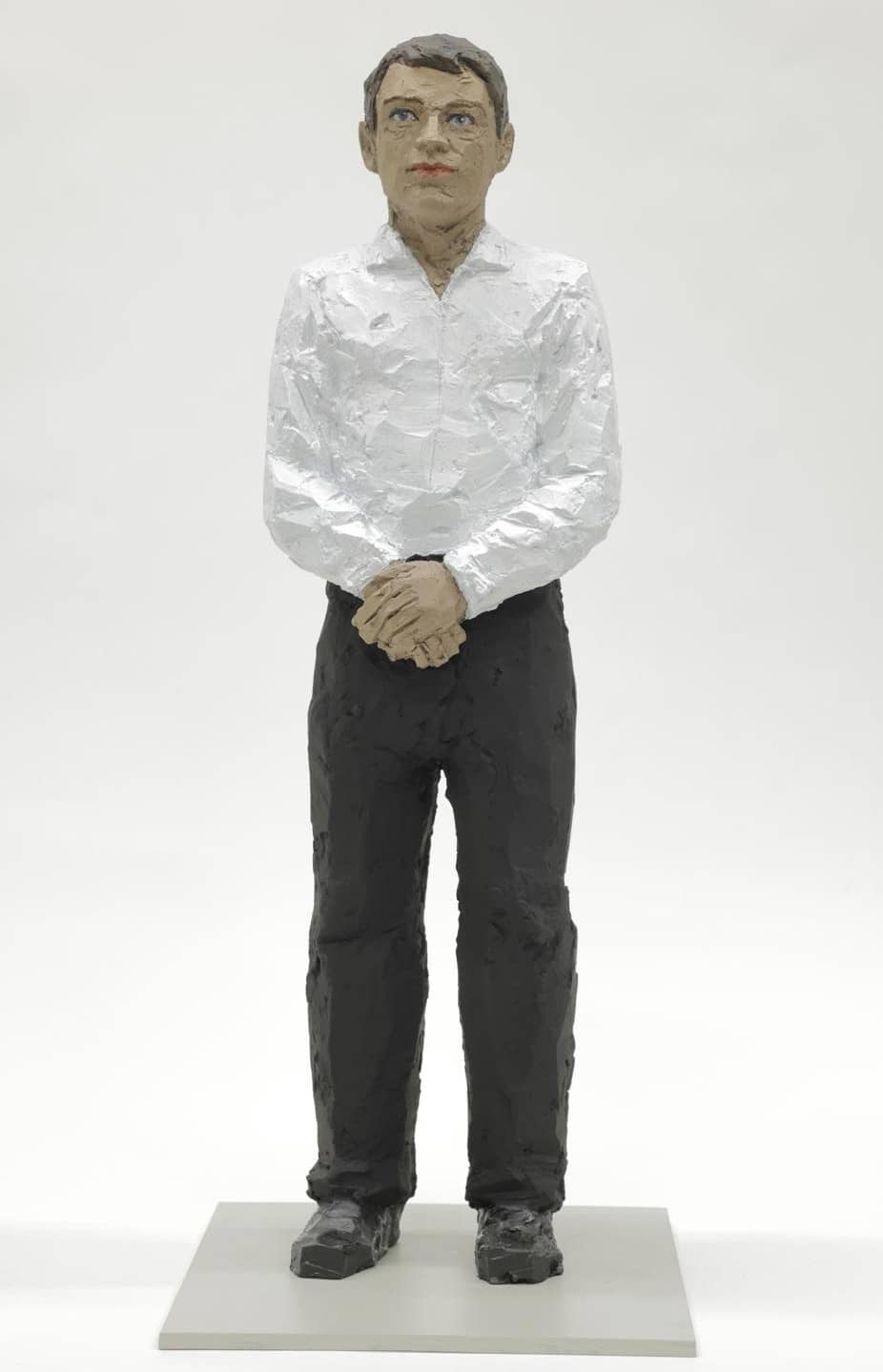
At the same time, the work engages with the legacy of classical antiquity. Famous statues like the Venus de Milo or Botticelli’s Venus celebrated an ideal of perfection and grace that often seemed impossibly far removed from real life. The clothed bronze Venus, however, brings the divine into the profane everyday. It suggests that the “goddess” does not exist on some distant Mount Olympus or in a museum-like ideal, but can be found in every woman we encounter on the street. The care taken with the bronze underscores this claim: the noble material, used for millennia for monumental statues of rulers and gods, ennobles the ordinary here. The interplay of light and shadow on the bronze folds of fabric makes the texture of the clothing almost tangible and lends the depiction a permanence that transcends the fleeting moment. Ultimately, the sculpture creates a new form of iconography. It celebrates woman not for what she portrays, but for who she is. The contrast between the mythologically charged name and the simple, modern appearance invites the viewer to question their own definitions of beauty, femininity, and divine presence. This “Venus” is not a distant art object, but rather an homage to human dignity and the quiet strength that reveals itself precisely in the unhurried nature of everyday life. Human beings are central to Stephan Balkenhol’s work. They are usually alone, but occasionally accompanied by animals or architectural elements. The figures we encounter in his roughly hewn and painted wood or bronze sculptures are anonymous, reserved, even emotionless. A man in black trousers and a white shirt, his hands reverently folded in front of his stomach. The use of bronze for a sculpture depicting a woman in contemporary clothing creates a fascinating tension between the permanence of the material and the fleeting nature of fashion. While bronze is an alloy that can last for millennia and has been used for monuments and statues of gods since antiquity, modern clothing—a T-shirt, jeans, or a simple coat—is the epitome of the momentary and the transient. Clothing is subject to the constant flux of trends and precisely marks a point in time, which is why it is usually perceived as the exact opposite of eternity.
By casting these everyday textiles in bronze, the artist performs a kind of alchemy that elevates the profane to the status of the sacred. Every fine fold in the fabric, every seam, and every button is fixed and preserved for eternity by the metal. This materialization of transience lends the sculpture a melancholic depth, reminding us of the fleeting nature of our daily lives while simultaneously petrifying them in a solemn way. The bronze strips the clothing of its softness and function, transforming a fashionable everyday object into an archaeological artifact of the future. This contrast also reinforces the human element of “Venus.” The weight of the bronze gives the ephemeral appearance of a modern woman a weight that anchors her in art history. Where textiles in reality disintegrate and fade, the bronze shell endures, preserving the contours of the individual personality. Thus, everyday clothing becomes the timeless garment of a new mythology, one that no longer unfolds on Mount Olympus but on the asphalt of the present.
The sculpture is made of bronze, an alloy of copper and other metals (especially tin) that has been used since antiquity. It is an ideal metal for high-quality artistic castings that last for thousands of years. In bronze casting, the artist typically uses a process over 5,000 years old: the lost-wax casting method. It is the best, but also the most elaborate, method for producing sculptures. First, the artist creates a model of their sculpture. This is then embedded in a liquefied silicone rubber compound. Once the material has solidified, the model is cut out. Liquid wax is poured into the resulting negative mold. After cooling, the wax casting is removed from the mold, fitted with sprues, and dipped into a ceramic slip. The ceramic slip is fired in a kiln, and the wax flows out (lost-wax casting). Now, the negative mold is finally available, into which the molten bronze is poured at approximately 1400°C. After the bronze has cooled, the ceramic shell is broken, revealing the sculpture. The casting channels are then removed, and the surfaces are polished, patinated, and numbered by the artist or a specialist according to their specifications. In this way, each casting becomes an original. For lower-quality bronze castings, the sand-bed casting process is often used, but its surface finish and overall quality cannot match the more elaborate lost-wax casting process.
- Stephan Balkenhol Unicorn / sculpture / signed, numbered / edition of 24
- Stephan Balkenhol Laocoon / sculpture / signed, numbered / edition of 24
- Stephan Balkenhol Man in white shirt / relief / signed, numbered / edition of 40
- Stephan Balkenhol Man with white shirt and black trousers / sculpture / signed, numbered / edition of 30


Year: 2026
Format: 27 x 64 x 27 cm / 10.6 x 25.2 x 10.6 inch
Material:Bronze
Method:sculpture
Edition:30
Other:signed, numbered on the base