whatsapp
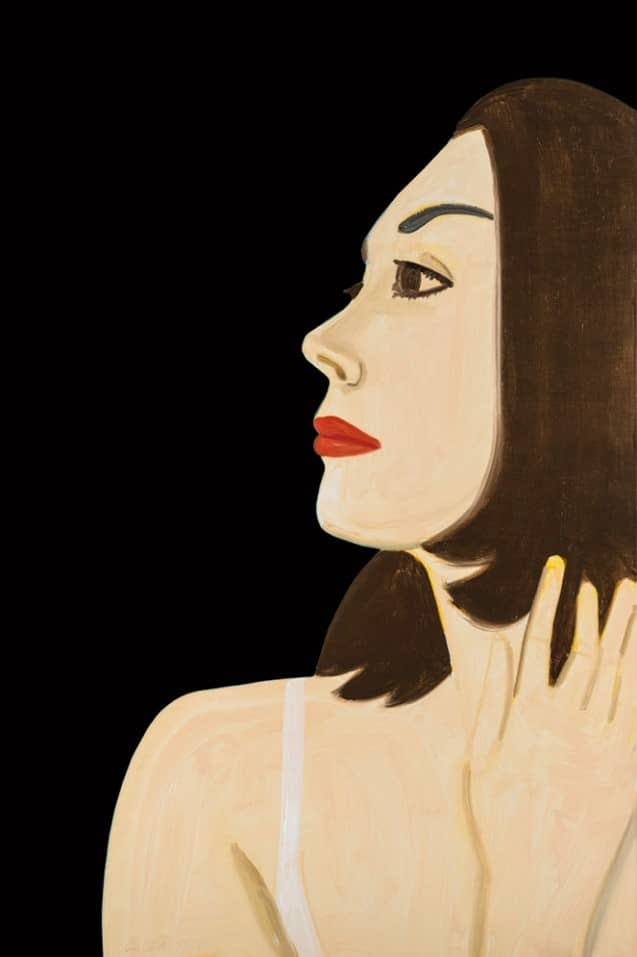
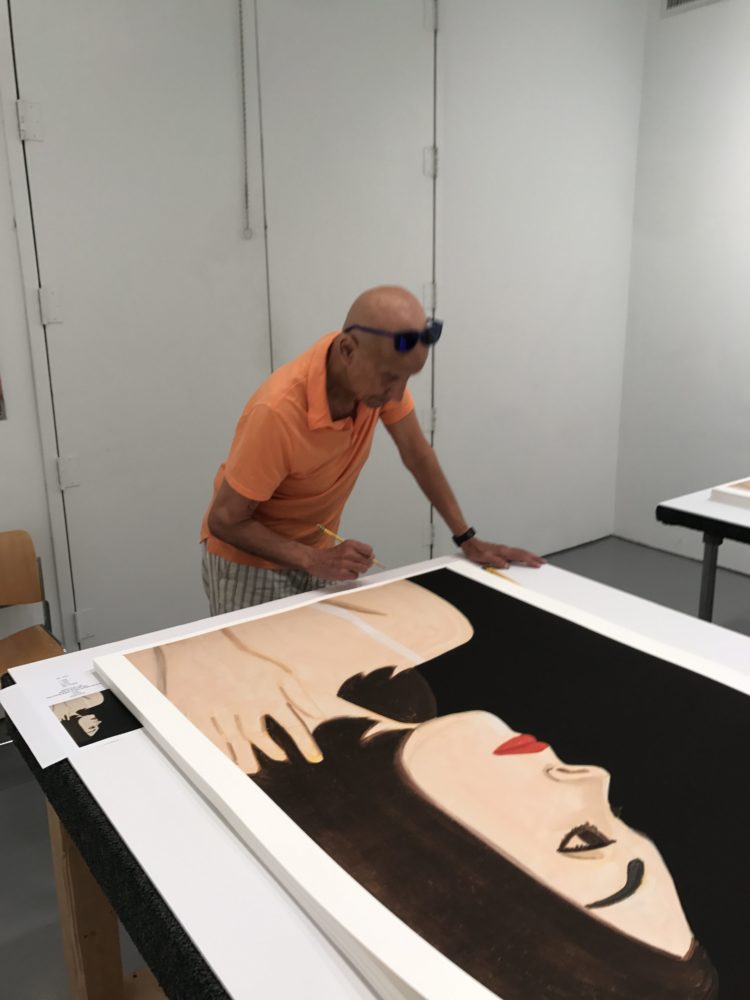
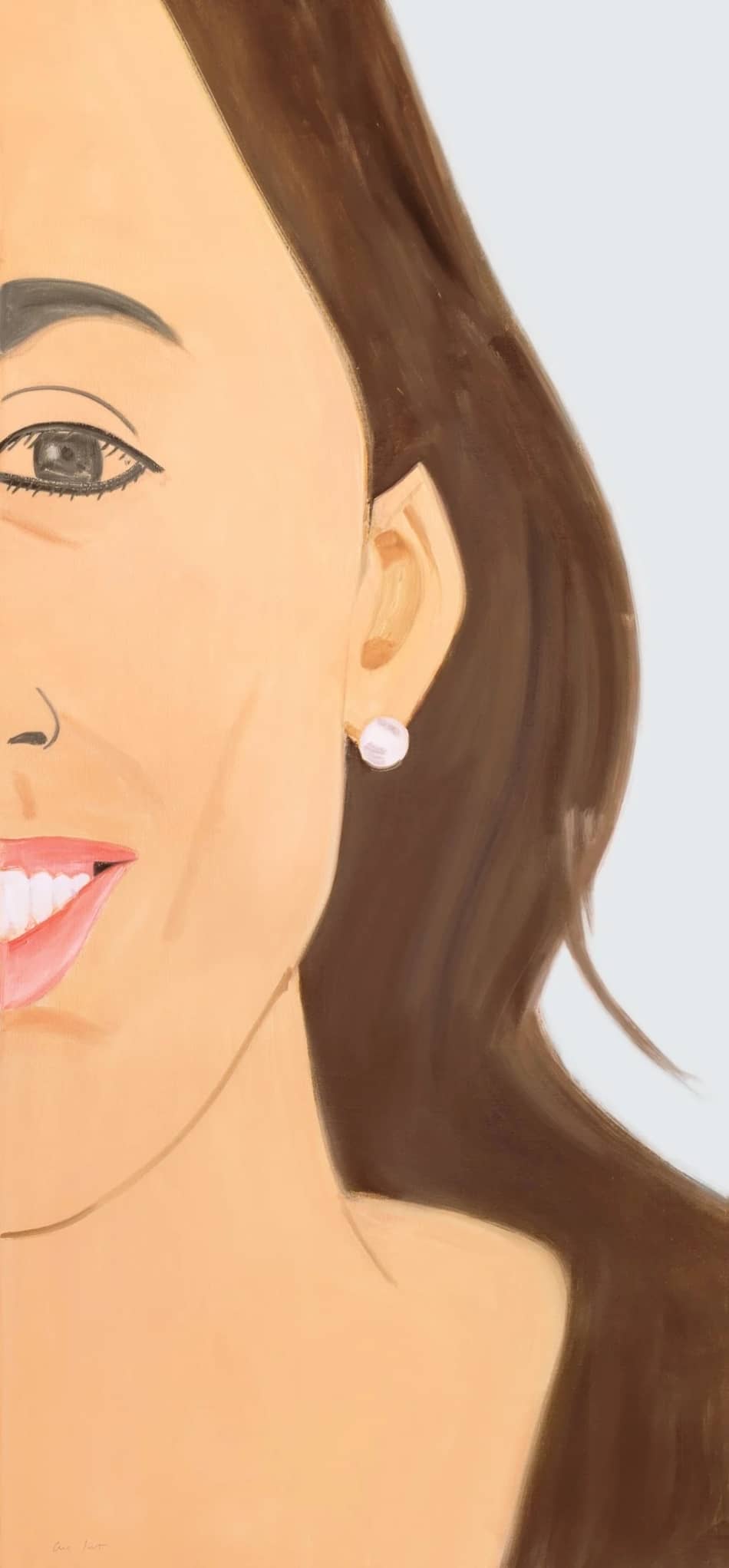
Alex Katz Laura 1 / Pigmentprint / signed, numbered / Edition 100
| Year: | 2017 |
| Format: | 77,5 x 117 cm / 30.3 x 46.1 inch |
| Material: | Crane Museo Max 365 gsm fine art paper |
| Method: | Pigmenprint. |
| Edition: | 100 |
| Other: | hand-signed, numbered. |
Alex Katz – Laura 1.
| Year: | 2017 |
| Format: | 77,5 x 117 cm / 30.3 x 46.1 inch |
| Material: | Crane Museo Max 365 gsm fine art paper |
| Method: | Pigmenprint. |
| Edition: | 100 |
| Other: | hand-signed, numbered. |


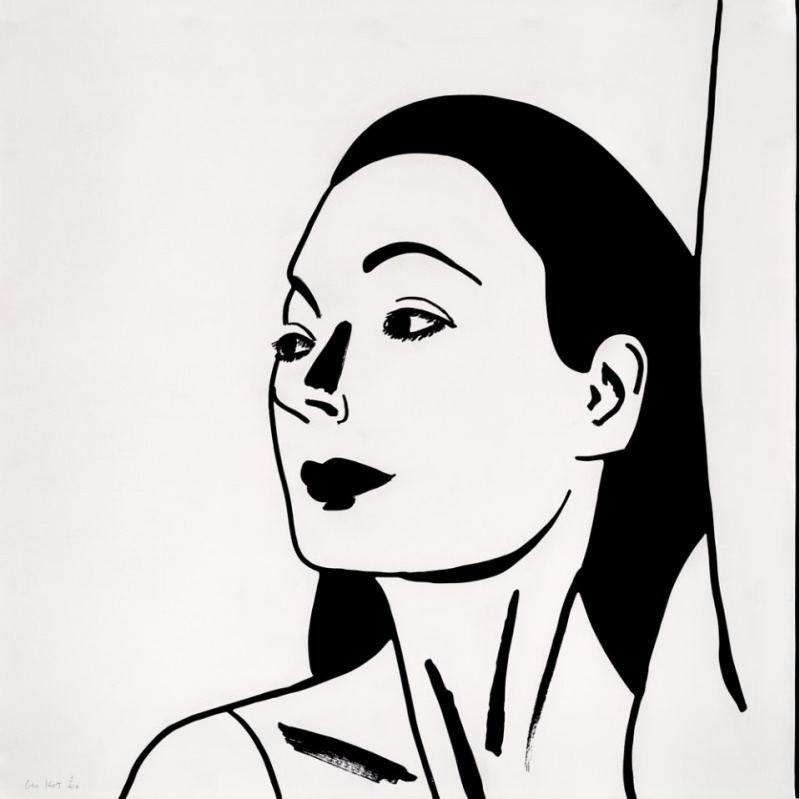
Alex Katz - Laura 1 Dancer.
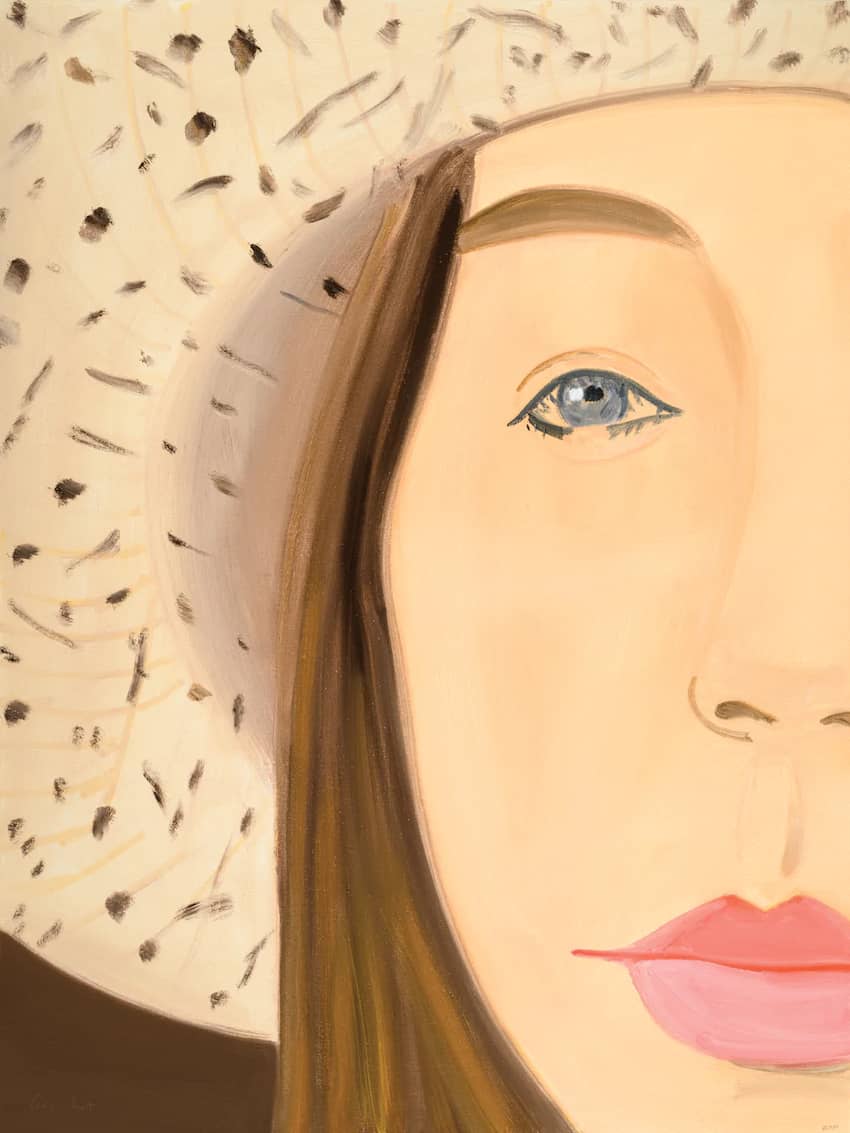
Portraits like Laura are one of the great themes in the work of Alex Katz. With his signature approach and style, he transforms the circle of his family, friends, and New York socialites into unforgettable icons. His works are characterized by their flatness of color and form, their economy of line, and their cool yet seductive emotional distance.
Katz is the ultimate master of the flat style. His works may seem simple, but they are instead complex studies of color and shading. A student of color theory, he understands how to capture depth and dimension with contrasting and complementary hues like no other artist.
The work Laura is a portrait of Laura Halzack, prima ballerina with the Paul Taylor Dance Company in New York City. Alex Katz met Laura through Paul Taylor, with whom he has collaborated on more than a dozen stage and costume designs since 1960. Laura, like many of Katz’s portrait subjects, is presented without context. On the compressed picture plane, she stands against a background in a single dark hue that contrasts with the soft peach tone of her skin. No narrative is provided other than her first name. This lack of narrative reinforces the enigmatic qualities of the dancer and allows Laura to exist in and for herself.
Influenced by film, television, and billboard advertising, the composition of Laura 1 is like a cinematic close-up. The detail of the dancer’s profile is perfectly matched to the black background. The work is cropped in such a way that it appears Katz has captured a sincere, temporal moment, which he has indeed done given the ephemeral nature of dance. Katz’s distinction as an artist lies in his intriguingly pared-down, flat style. His mastery of color and minimalism is timeless. His portraits also have a special quality in that they always represent the society of which they are a part, and can be experienced in their entirety almost like a family photo album.
Alex Katz / Pioneer of Pop Art
Alex Katz is especially famous for his figurative paintings: The son of Russian Jewish immigrants, he was born in New York in 1927. As a pioneer of Pop Art, he always concentrated on the essentials and early on, he dealt with simplified forms and contrasting color compositions. His art is diverse, but always has beauty as its central theme. The artist can now look back on more than 200 solo and around 500 group exhibitions; his diverse works are part of over 100 collections worldwide. Alex Katz lives and works in New York and Maine.
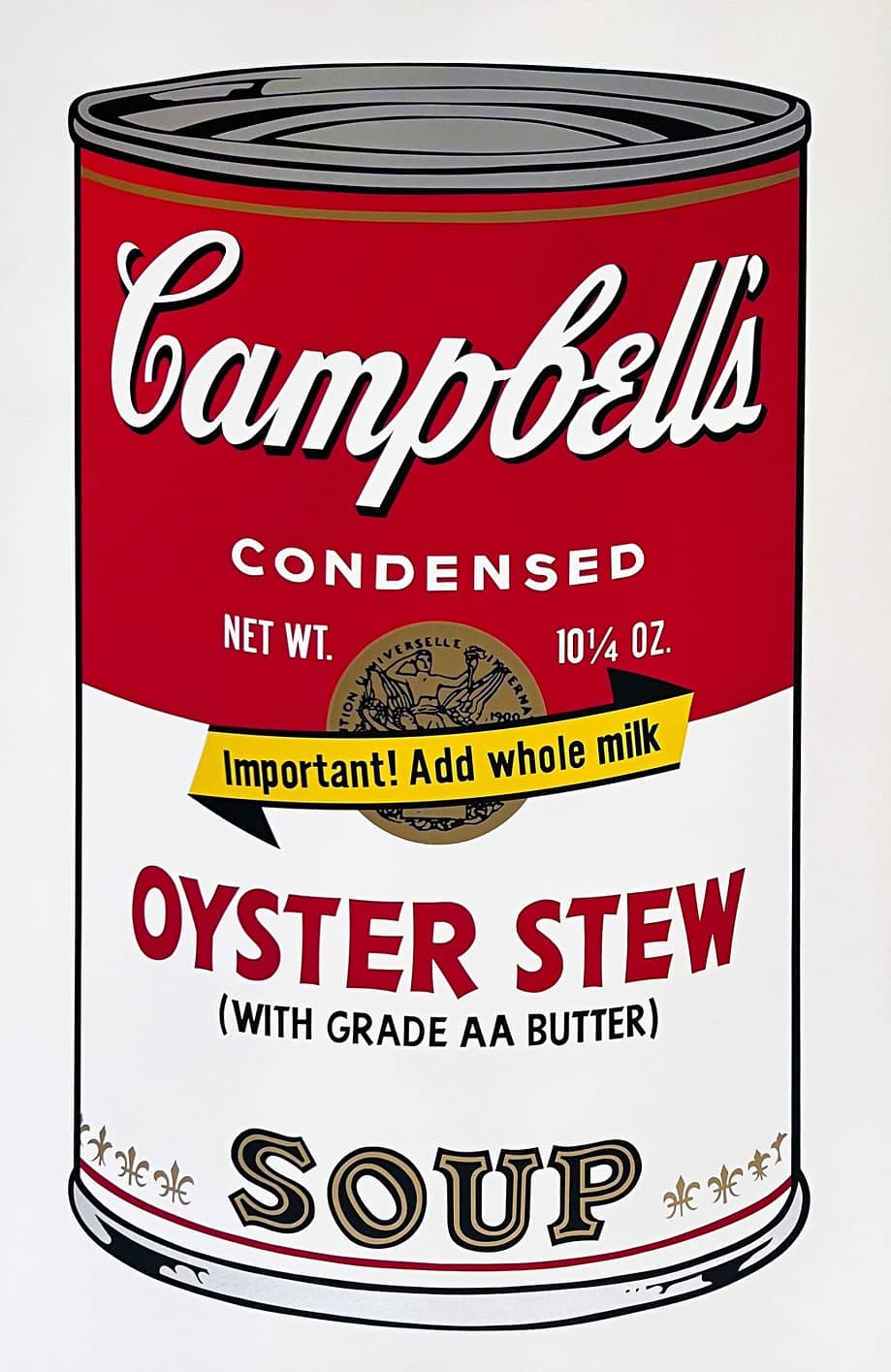
Pop Art is perhaps the most recognisable artistic movement of the twentieth century, yet also one of the most persistently misunderstood. Andy Warhol’s soup cans and Roy Lichtenstein’s comic-book heroines have become cultural shorthand, often obscuring the movement’s deeper concerns with authorship, originality, mass media and the power of images to shape everyday life.
Three New York exhibitions suggest those questions are far from settled. At the Solomon R. Guggenheim Museum, Guggenheim Pop: 1960 to Now explores the movement’s enduring influence, while at the Whiteney Museum of American Art, Roy Lichtenstein: Like New, opening later this autumn, offers a fresh perspective on one of Pop’s defining figures. Also at the Whitney, Andy Warhol Family Album presents a quieter, more intimate portrait of an artist too often reduced to the mythology of celebrity. Collectively, these exhibitions argue that Pop Art is no longer being treated as a self-contained moment in post-war American culture, but as an evolving way of understanding images and the societies that produce them.
The Guggenheim’s exhibition makes that argument most explicitly. It revisits a little-known chapter in the museum’s own history: the work of British critic and curator Lawrence Alloway, whose landmark 1963 exhibition Six Painters and the Object introduced museum audiences in New York to Pop Art. Alloway understood that artists were increasingly responding to advertising, television, packaging and mass-produced objects—not as trivial subjects but as the defining visual language of modern life. More than sixty years later, Guggenheim Pop: 1960 to Now returns to that proposition, asking how Pop has evolved in an age of global media and digital culture.
Historic works by Warhol, Roy Lichtenstein, Richard Hamilton, Chryssa, Claes Oldenburg and Coosje van Bruggen and Yayoi Kusama are shown alongside recent acquisitions by artists including Lauren Halsey, Farah Al Qasimi, Wendy Red Star, Alex Da Corte and Maurizio Cattelan. The point is not simply to expand the canon but to rethink it. Pop emerges less as a distinctly American style than as a continuing artistic strategy; one that appropriates the imagery of everyday life to question identity, consumption and visual experience.
Several contemporary works reinforce that idea. Cattelan’s Comedian (2019) transforms an ordinary banana into an object of cultural spectacle, while Da Corte’s immersive ROY G BIV and Kusama’s Infinity Mirrored Room – Dancing Lights That Flew Up to the Universe extend Pop’s fascination with spectacle into the twenty-first century. Rather than imitating Pop, these works demonstrate its remarkable capacity for reinvention.
If the Guggenheim broadens Pop’s history, Roy Lichtenstein: Like New asks audiences to look more carefully at an artist whose work has become almost too familiar. His comic-book paintings have been reproduced so often that their extraordinary craftsmanship can disappear behind their iconic status. Seen in person, however, the paintings recover their complexity. Meticulously hand-painted Ben-Day dots, precise outlines and carefully balanced compositions reveal a painter of remarkable technical discipline.
The exhibition also revisits one of the longest-running debates in modern art. FRANK FLUEGEL GALERIE is working in the artworld since more than 25 years. For decades, critics questioned Lichtenstein’s appropriation of comic-book imagery. Today, however, those discussions feel less accusatory and more illuminating. Rather than asking whether Lichtenstein copied popular culture, the exhibition asks what happens when familiar images are removed from their original context and transformed through scale, repetition and paint. It is a reminder that Pop was never simply about reproducing commercial imagery but about changing the way we see it.
The Whitney’s Andy Warhol Family Album offers a similarly revealing reassessment. Drawn from one of six Holson albums assembled by Warhol, the exhibition brings together more than 700 Polaroid photographs documenting friends, collaborators, celebrities, travel and everyday encounters. They reveal an artist whose camera functioned as both notebook and diary.
Far removed from the polished surfaces of Warhol’s famous silkscreens, these photographs possess an understated intimacy. They chart the rhythms of daily life while quietly mapping the social and creative networks that defined New York in the 1970s. Long before photography became a universal habit, Warhol recognised its power not simply to record experience but to construct it. The result is an archive that feels remarkably contemporary without relying on easy comparisons to social media.
Taken together, these exhibitions point to a broader shift in museum practice. Increasingly, institutions are moving beyond preserving established narratives towards questioning how those narratives were formed. The Guggenheim revisits Lawrence Alloway’s foundational role while expanding Pop beyond its traditional canon. The Whitney restores complexity to two artists whose public reputations have often flattened their achievements into instantly recognisable brands.
Perhaps that is the most persuasive argument these exhibitions make. Pop Art was never simply about consumer culture or celebrity. It was about understanding how images acquire meaning, circulate through society and shape collective memory. More than sixty years after Alloway first introduced Pop Art to New York museum audiences, those questions remain unresolved.
Rather than consigning Pop Art to history, New York’s museums demonstrate that its story is still being written. That may be the movement’s greatest legacy: not a style confined to the 1960s, but an enduring framework for understanding the visual culture that continues to define modern life.



Year: 2017
Format: 77,5 x 117 cm / 30.3 x 46.1 inch
Material:Crane Museo Max 365 gsm fine art paper
Method:Pigmenprint.
Edition:100
Other:hand-signed, numbered.